Notes from Douglas Rowlings, Managing Partner and Chief Executive Officer, on S&P Global Ratings’ European Insurance Conference 2026, “The Future of Insurance in an Uncertain World”, held in London on 19 November 2026.
S&P Global Ratings’ European Insurance Conference in London was excellent, with private credit very much the hot topic. My notes cover the first half of the afternoon: the ratings picture, the Solvency II review and the private credit panel.
Ratings: insurance is still S&P’s highest-rated sector
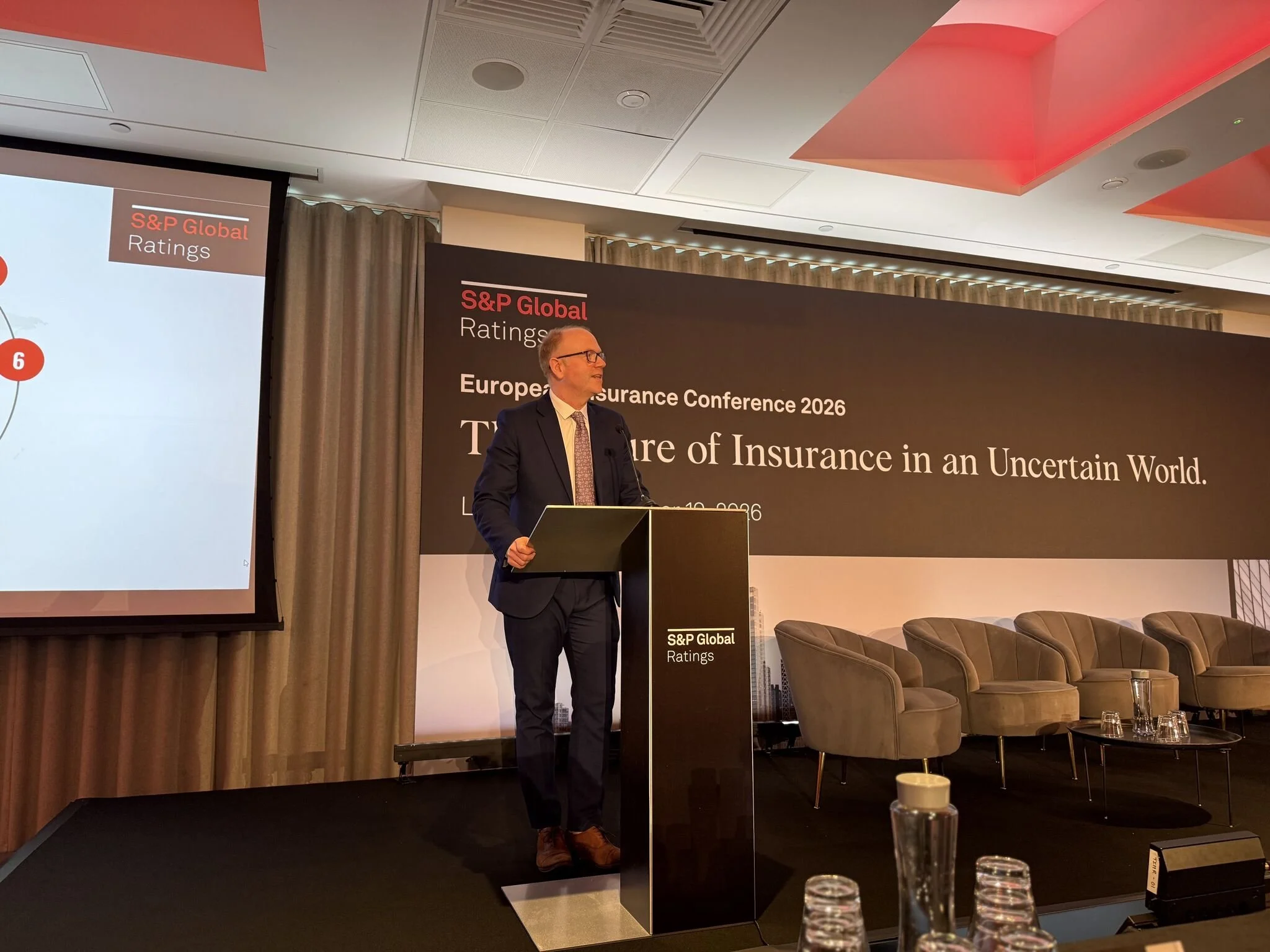
Simon Ashworth, Chief Analytical Officer for Insurance Ratings at S&P Global Ratings, opened with the ratings picture. Insurance is still S&P’s highest-rated sector on average, with upgrades outnumbering downgrades by about three to one over the last 18 to 24 months. His watch point for 2027 is M&A, where the industry does not have a good track record of turning deals into credit benefits.
The stat that jumped out for me was data centre insurance, with c.$10bn of premium expected this year, double the global aviation market. On private credit, S&P’s stress tests show a manageable impact for nearly all of its rated North American life insurers in all but the most extreme scenario, a 30% default rate on middle-market loans.
Solvency II: the same ratio, with less capital behind it
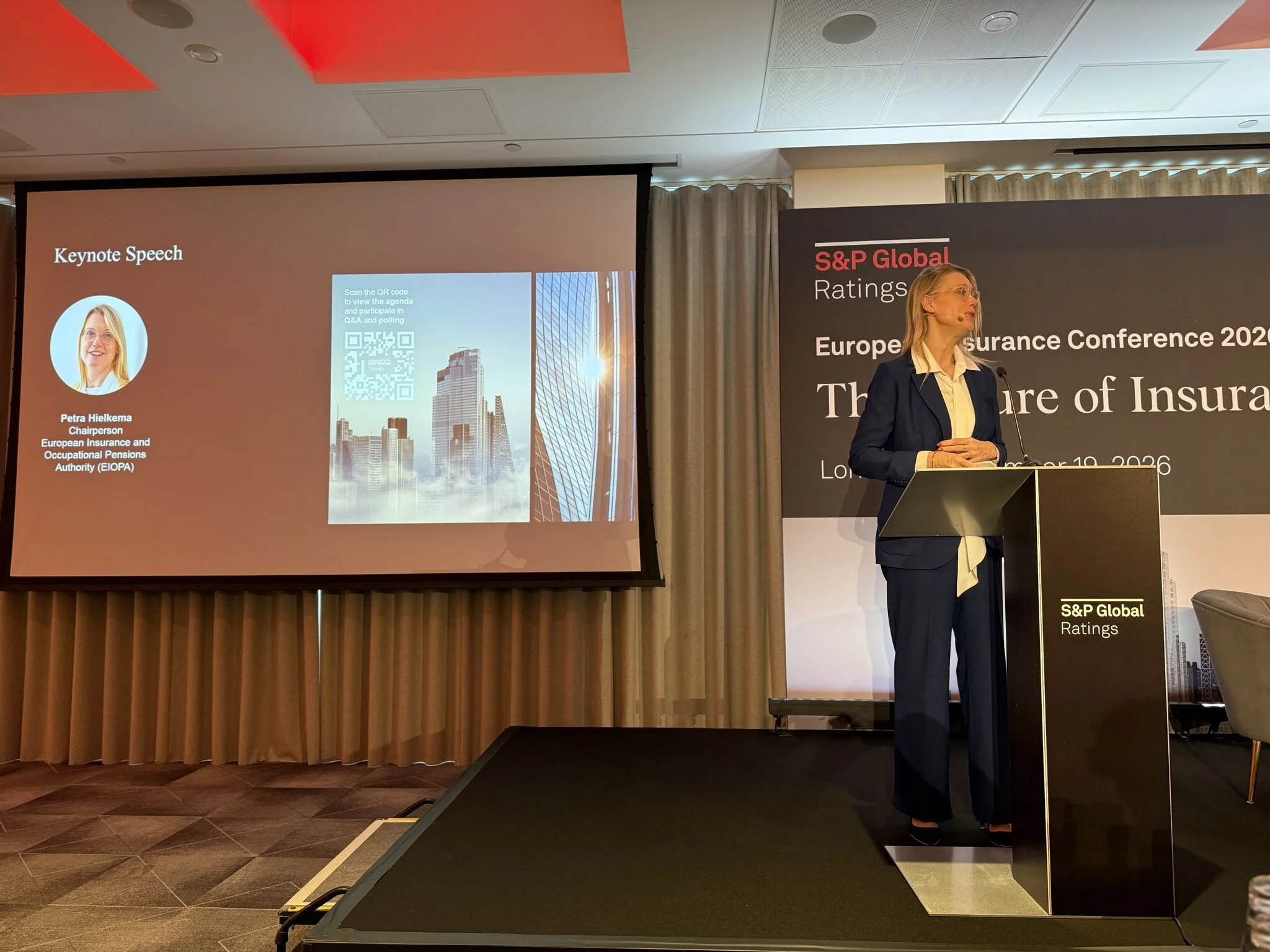
Petra Hielkema, Chairperson of the European Insurance and Occupational Pensions Authority (EIOPA), followed with a very insightful keynote on the Solvency II review, which applies from 30 January 2027. The risk margin cost of capital comes down from 6% to 4.75% and securitisation charges fall. Her warning was that a 200% solvency ratio after the review will have less capital behind it than 200% today, and EIOPA will report by the end of 2028 on whether the released capital has gone into investment or dividends.
She put EU insurers’ private credit exposure at only 2% to 5% of assets, depending on whether you count mortgages, and had my favourite line of the day for anyone eyeing insurers to fund data centres and defence. They are “not ATMs”.
Private credit: will the rating hold?
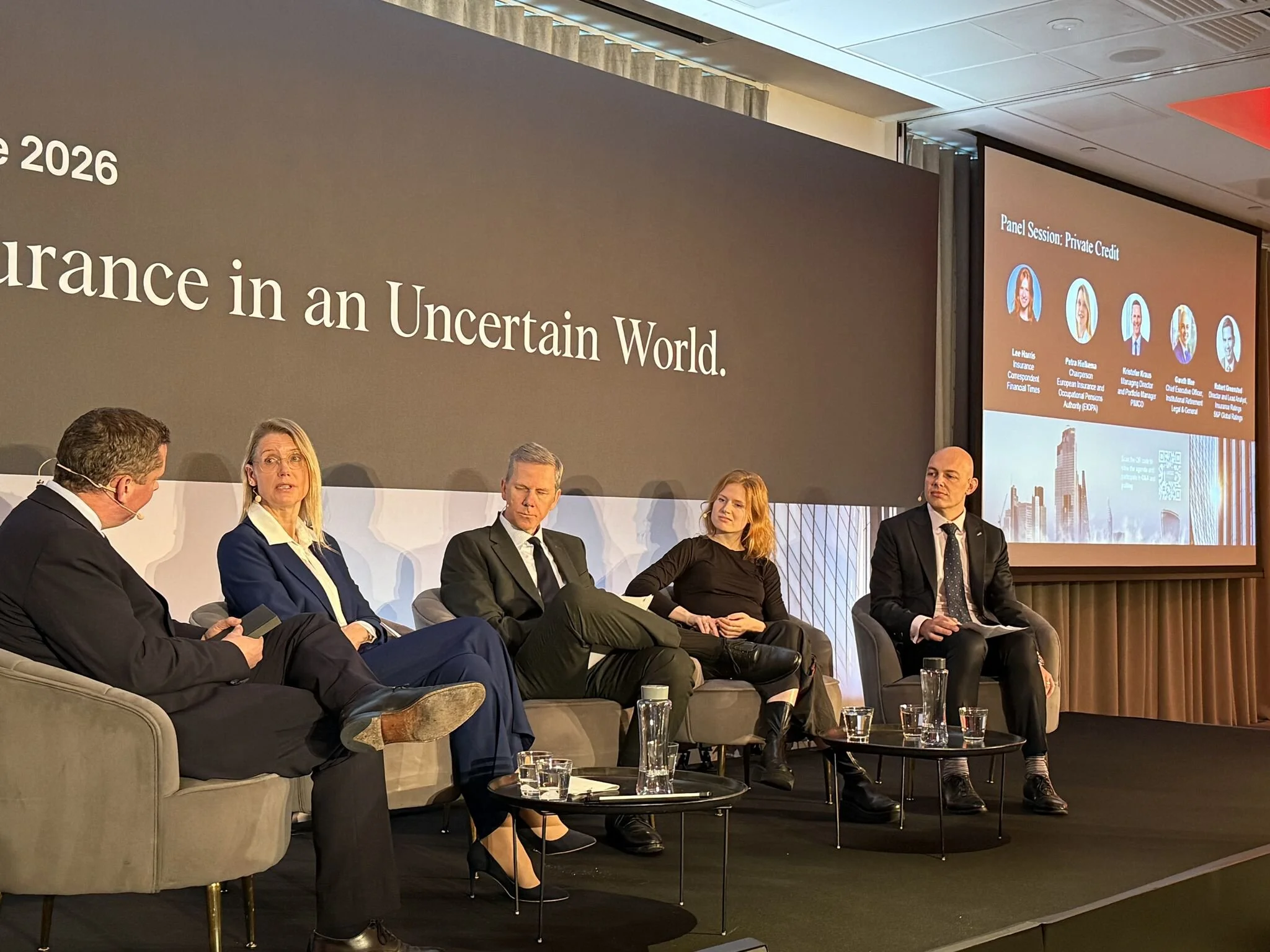
Robert Greensted of S&P Global Ratings then chaired a lively panel. Kristofer Kraus of PIMCO said what counts is the investment process and whether the rating will hold, rather than how quickly the money can be put to work. Gareth Mee of Legal & General explained why 40 to 60-year pension promises sit well with investment-grade, illiquid assets. Lee Harris of the Financial Times had no quarrel with illiquid assets for a life insurer, but asked how the newer structures, mostly in the US, will perform in a downturn, with AI and data centre financing her example.
The second half
Unfortunately, I had to step out before the second half, so I missed Volker Kudszus on the 2027 European outlook, the AI panel with Miriam Fernandez, Vitaly Baranov, Ericson Chan, Vanessa Escrivá and Nicola Parton, the keynote from Urs Baertschi and closing remarks from Andreas Lundgren Haréll. I look forward to catching up with my colleagues Marc Turner and Tom Sherlock, who stayed for the rest.
For issuers and sponsors
With my ratings-advisory hat on, Kristofer Kraus’s point is the one I would underline. For issuers and sponsors looking to insurers for long-dated funding, the stability of the rating matters as much as the rating itself.
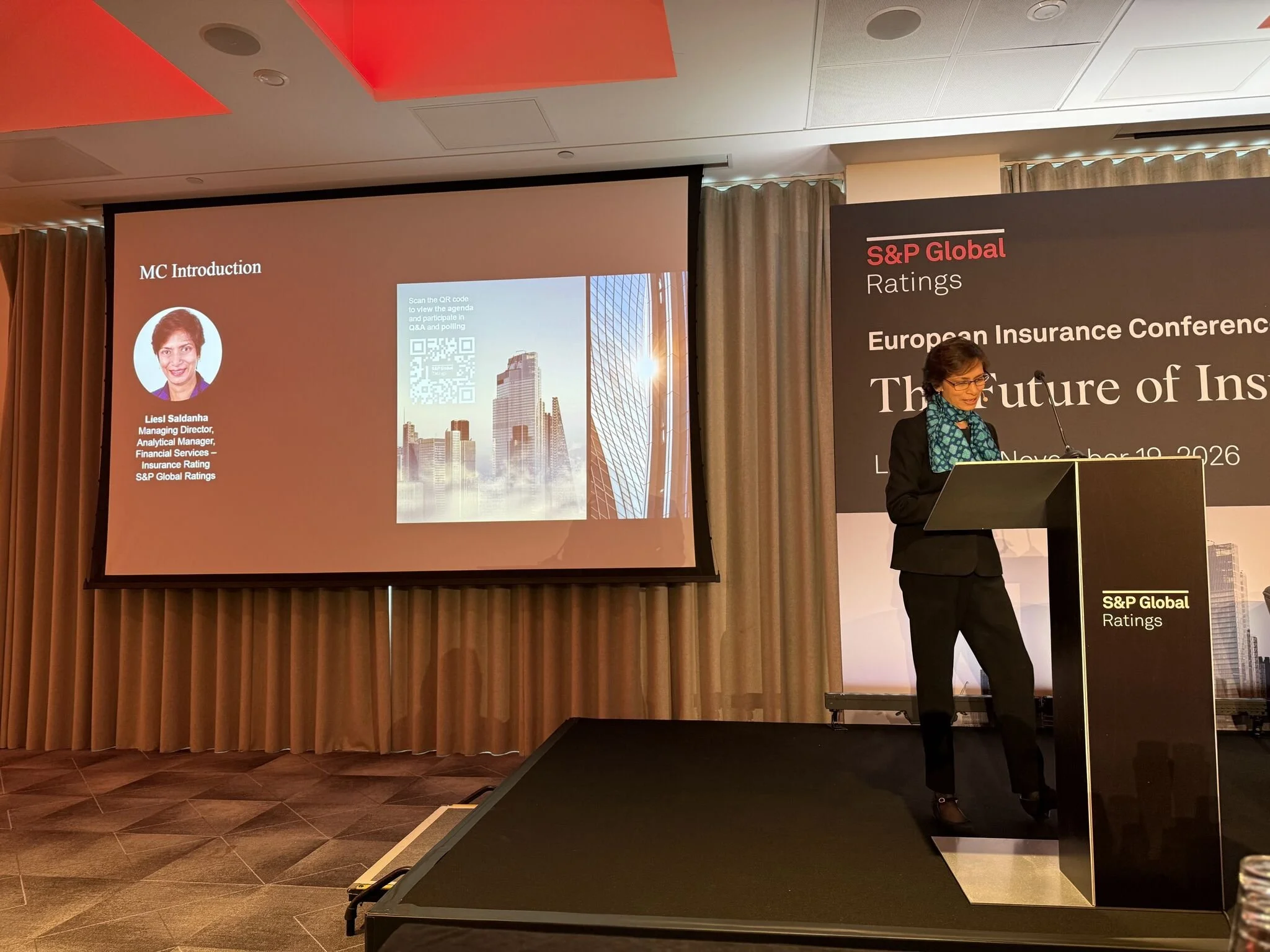
Many thanks to Liesl Saldanha, the MC for the afternoon, and the S&P Global Ratings team for hosting. It was a pleasure to represent ALPHA Ratings Advisory.
If you are looking to insurers for long-dated funding and would like to discuss what that means for your rating, we would be glad to talk it through. Arrange a free, strictly confidential initial consultation via our contact page.